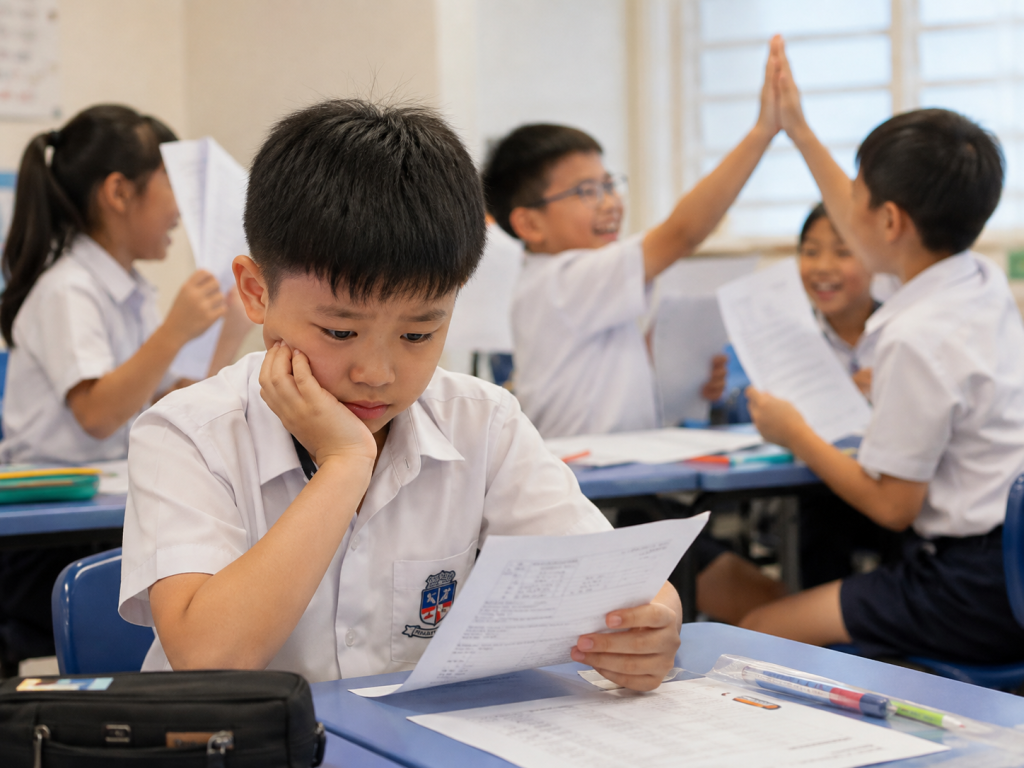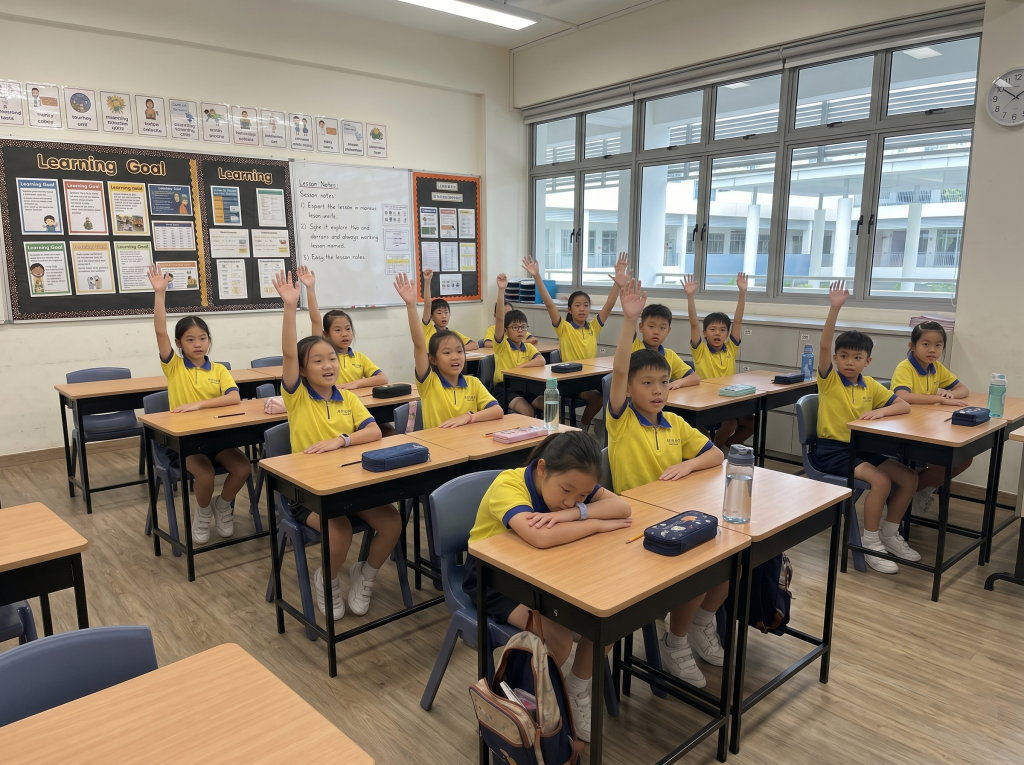
Picture a classroom full of raised hands: every hand but one. Your child stares at the desk, certain they know the answer, but something quieter, something harder to name, holds them back.
If this sounds familiar, take a breath. You are not alone, and neither is your child.
Research found that approximately 40% of people describe themselves as shy, and many trace it back to their school years. Shyness is not a flaw. It is not a failure. And it is certainly not a life sentence.
With patience, encouragement, and the right support at home, in school, and in enriching after-school environments, quiet children can, and do, find their voice.
This guide gives parents practical, proven strategies to help make that transformation happen. Because the child who finds their voice at eight will carry that confidence with them for the rest of their life.
Understanding Why Some Children Are Shy (Temperament vs Environment)
It Starts With Temperament
Children are born on a spectrum. Some are naturally more cautious, more sensitive, more inclined to observe before they engage. This is not a problem; it is simply personality.
It helps to understand the difference between introversion and shyness. Introverted children prefer quieter environments and tend to recharge through solitude, but they can engage confidently when they feel comfortable. Shy children experience genuine anxiety in social situations, a flutter of fear at the thought of being seen, heard, or judged.
Both are valid. And both can be gently, patiently supported.
The Role of Environment
Early childhood experiences leave deep impressions. How a child is spoken to, whether their opinions are welcomed, and whether mistakes are treated as learning opportunities or sources of shame, all of this shapes social confidence in powerful ways.
School transitions are particularly significant. Moving from kindergarten to Primary 1, joining a new class, or navigating an unfamiliar school environment can trigger withdrawal in even the most naturally outgoing child. New faces, new rules, and the fear of being judged by strangers create a very real social pressure that many children need time and support to navigate.
Common Reasons Children Go Quiet at School
Even confident children can become quieter under the right conditions. Understanding the trigger helps parents respond with empathy rather than frustration.
Watch for these common causes:
- Fear of making mistakes: In Singapore’s competitive academic environment, where a wrong answer can feel humiliating in front of 30-plus peers, many children simply choose silence as the safer option
- Unfamiliar environments or new classmates: The brain treats social novelty as a mild threat; children need time and safe, gradual exposure to adjust
- Previous negative experiences: Negative experiences, such as being laughed at, corrected harshly, or dismissed, can create a lasting reluctance to speak up
- Language barriers or communication challenges: Children who speak a different language at home, or who have mild speech delays, may quietly withdraw from verbal participation
It is also worth remembering that quiet behaviour at school does not always mirror behaviour at home. A child who is lively, funny, and expressive at the dinner table may become a different person the moment they walk through the school gate. This contrast is not an inconsistency; it is a signal. It tells you that your child has the capacity; they simply need the right conditions to show it.
Silence is often self-protection. Understanding why your child is quiet is the first step to helping them feel safe enough to speak.
Creating a Safe and Supportive Home Environment
The home is where confidence is planted. Everything that happens outside in classrooms, on playgrounds, and in after-school centres grows from the roots laid here.
Build Emotional Security
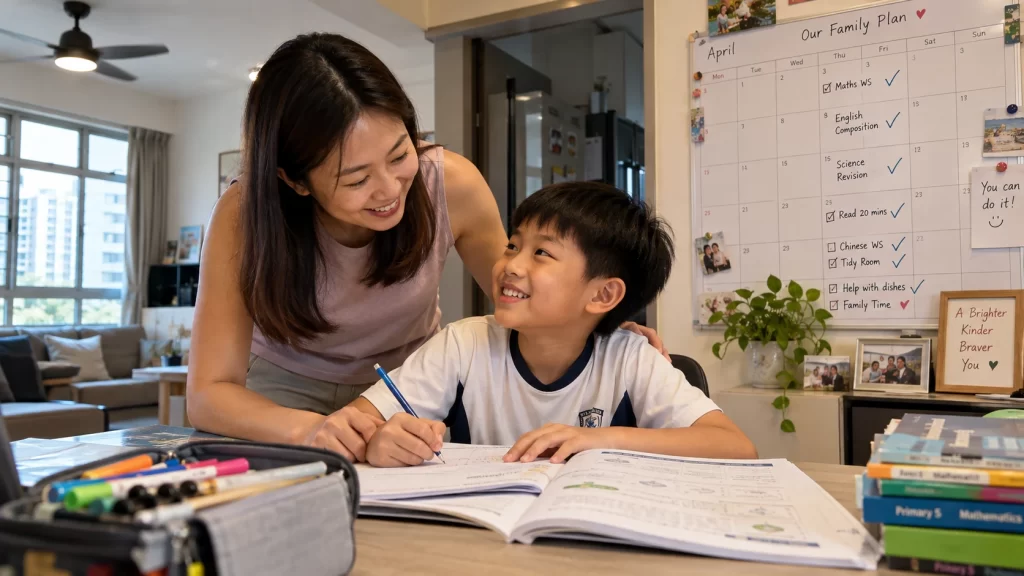
Make space for daily, unhurried conversations about school. Not interrogations, but invitations: “What was the best part of your day?” or “Did anything feel hard today?”
Listen without rushing to fix. When children share a social worry, resist the urge to immediately solve it. Simply being heard builds the emotional safety to try again tomorrow.
Praise Effort, Not Just Results
Celebrate attempts, however small. Your child raised their hand and changed their mind at the last second? That moment of quiet courage deserves acknowledgement loudly.
Shift the language of praise: instead of “Well done for getting it right,” try “I’m so proud you tried.”
Progress, not perfection, is always the goal.
Practise Communication at Home
- Family discussions give children a genuine voice at the dinner table. Ask for opinions. Welcome respectful disagreement. Every opinion expressed is a confidence-building exercise.
- Role-play classroom scenarios. like pretend I’m your teacher. ‘ How would you ask a question?’ It’s a low-stakes, high-confidence payoff.
- Encourage opinions on everyday decisions, such as what film to watch and where to spend the weekend. Small choices build the habit of speaking up.
Encouraging Small Social Wins (Class Participation and Group Activities)
Confidence is not switched on overnight. It is accumulated one small, successful interaction at a time.
Start With Low-Pressure Opportunities
- Partner work before whole-class speaking: one trusted classmate is far less intimidating than thirty pairs of eyes
- Small group activities, science projects, reading circles, and creative workshops reduce the social stakes and make participation feel natural rather than forced
Build Up Gradually
Set micro-goals together. Answer one question per lesson. Say hello to one new classmate per week. Small targets feel achievable, and achieved targets build belief.
Joining a CCA (co-curricular activity) is one of the most powerful confidence accelerators available to primary school children. Shared interests replace the pressure of small talk with purpose, and purpose is far less frightening than a room full of strangers.
Build Meaningful Friendships
- Arrange playdates with one or two classmates. Smaller settings allow shy children to show their full personality without the overwhelm of a crowd
- Encourage teamwork and collaborative learning at school and in after-school environments. When children work toward a shared goal, connection happens organically
Stack enough small wins, and the transformation is remarkable.
Teaching Positive Self-Talk and Growth Mindset
What a child says to themselves in the quiet moment before they raise their hand matters enormously.
Help Children Reframe Negative Thoughts
Teach children to catch the inner critic and gently challenge it:
- Replace “I’m bad at speaking” with “I’m still learning to speak up, and I’m getting better every day.”
- Replace: “I’ll get it wrong” with: “I can try, and if I get it wrong, I’ll learn something.”
Research published in the Journal of Personality and Social Psychology found that even brief self-affirmation exercises reduce the brain’s threat response, making it measurably easier to take social risks. The science supports what instinct already tells us: kind words, even internal ones, change everything.
Develop Resilience
Teach children that mistakes are not the opposite of success; they are part of it. Share stories of once-shy people. Celebrate the attempt, not just the outcome. Encourage persistence even when it feels uncomfortable.
Simple Daily Exercises
- Morning affirmations: “Today, I will try one new thing.” Simple, specific, powerful.
- Weekly goal-setting: Help your child choose one small social goal, not “be less shy”, but something concrete: “I will say good morning to my teacher every day this week.”
The voice your child hears most is their own. Make sure it is kind.
Role of Teachers and Student Care Centres in Confidence Building
Parents cannot do this alone, and they should not have to. The adults who spend the most time with your child outside the home are powerful partners in building lasting confidence.
How Educators Can Support Shy Students
Great teachers create psychologically safe classrooms where wrong answers are welcomed, participation is praised over performance, and no child is put on the spot without preparation.
Strategies that work:
- Think-pair-share: children discuss with a partner before responding to the class, dramatically reducing the stakes of speaking up
- Written responses before verbal ones: allows shy children to organise their thoughts without the pressure of instant public performance
- Small leadership roles within group activities: being “in charge” of something small builds confidence in a structured, supported way
Regular, open communication between parents and teachers is essential. Share what you know about your child’s triggers. Ask what strategies are being used in the classroom. A united front makes an enormous difference.
How Student Care Centres Build Confidence
High-quality student care centres offer something even the best classrooms cannot always provide: consistent, low-stakes social interaction in smaller, warmer groups.
Structured group activities, collaborative projects, team challenges, and creative workshops build exactly the kind of gradual social exposure that child psychologists recommend for shy children.
At Pro-Teach, programmes like Expert English™ and Weaving Words™ give children a regular platform to express themselves, not in front of the whole school, but in a familiar group where they feel known and safe. Pro-Teach’s FutureReady Roadmap™ framework embeds personal development as a core pillar, meaning that building confidence is not an afterthought. It is part of everyday life.
The right after-school environment does not just supervise your child’s afternoons. It actively shapes who they are becoming.
When to Seek Additional Support if Needed
Most children grow out of shyness with time, patience, and the right environment. For many, the strategies outlined in this guide, combined with a nurturing home and a supportive school setting, are enough to unlock steady, meaningful growth.
But sometimes, what looks like shyness deserves closer attention. If your child’s quietness is accompanied by distress, avoidance, or a noticeable decline in well-being, it may be time to bring in additional support.
Signs to Watch For
- Extreme social withdrawal, refusing to interact even in comfortable, familiar settings with people they know well
- Persistent physical anxiety about school, recurring stomach aches, headaches, or tearfulness before school
- Refusal to attend school or participate in any group activity over an extended period
- A sudden, dramatic change in behaviour, a previously outgoing child becoming withdrawn, is always worth investigating with a professional
Professional Help Options
- School counsellors are the first and most accessible port of call, trained to identify and support children experiencing social anxiety
- Child psychologists for formal assessment and evidence-based therapeutic interventions
- Specialised social skills programmes: structured group sessions designed specifically to build social competence in children who need more targeted support
Seeking help is not an admission of failure. It is one of the most powerful and loving things a parent can do.
Helping Every Child Gain Confidence With Structured Enrichment Programmes
Confidence is not a personality type. It is a skill, and like all skills, it is built through practice, encouragement, and a safe space to grow.
Quiet children are not broken children. They are children who need a little more time, a little more patience, and the right environment to let their voices emerge. With the right foundations at home, meaningful partnerships with educators, and structured opportunities to connect with peers, even the shyest child can learn to step forward.
The journey from shy to confident is not a straight line. There will be days when the hand stays down, when the voice stays quiet, when the progress feels invisible. That is normal. That is part of the process. But every small, brave moment counts, and every small, brave moment brings your child closer to the version of themselves they are meant to become.
At Pro-Teach, we believe every child has a voice worth hearing. Our programmes are designed to help quiet children step forward in a warm, structured, and nurturing environment built for exactly this kind of growth. Contact us today and discover how Pro-Teach can help your child find their voice.