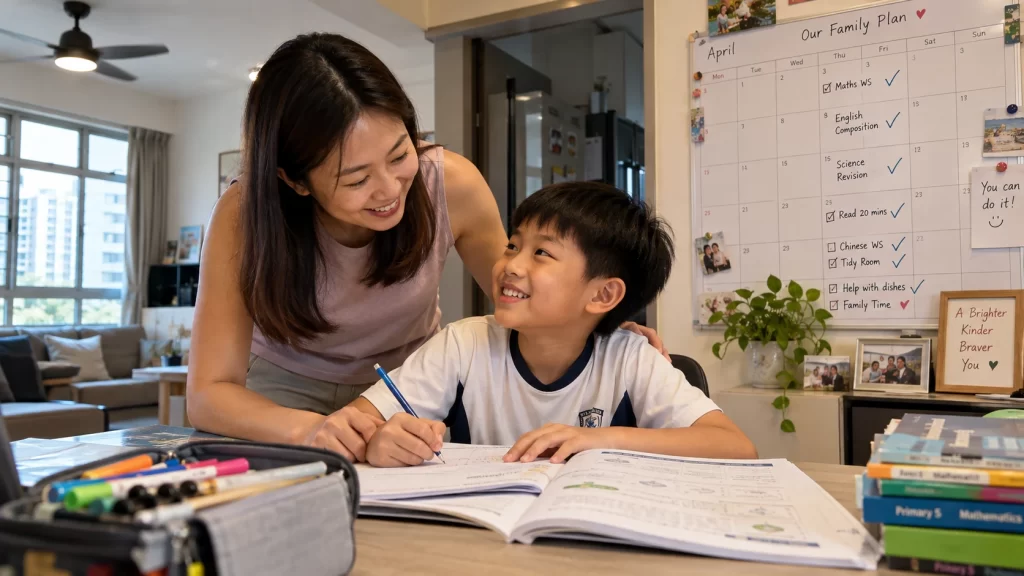
For Singapore parents, homework is rarely just homework. It is a nightly window into your child’s academic growth, their blossoming confidence, and their ability to take ownership of their own learning. From Primary 1 through to PSLE, the homework habits your child builds today will gradually shape how well they rise to the demands of secondary school and beyond.
Yet building these habits is easier said than done. Between after-school activities, screen time battles, and the sheer fatigue of a full school day, getting your child to sit down and focus can feel like a constant power struggle. The good news? With the right approach, you can transform homework time from a nightly ordeal into a structured, even empowering, routine that your child actually grows to embrace.
Why Homework Habits for Primary School Children Matter
Good homework habits for primary school children go far beyond completing assignments. They build self-discipline, cultivate a deep sense of responsibility, and prepare your child for the expectations of PSLE and the years that follow. When children learn to manage their homework routines early, they reduce the stress of last-minute cramming, strengthen their critical thinking skills, and develop the kind of steady confidence that makes learning feel achievable, not overwhelming.
The habits formed in P1 and P2 carry tremendous weight. Begin early, and the rewards compound with every passing year.
Create a Consistent Homework Routine
One of the most effective things you can do for your child’s learning is to set a fixed homework time every single day. Consistency signals to your child’s brain that it is time to shift gears and focus. Whether it is straight after a short rest when they return from school or after a light snack, pick a time that aligns with their natural energy and protect it fiercely.
Quick tips:
- Align homework time with school, enrichment, and CCA schedules so there are no competing pressures
- Build in a brief wind-down period before sitting down, particularly for younger children in P1 and P2
- Avoid late-evening study sessions where possible, as fatigue significantly slows progress and retention
Set Up a Conducive Study Environment at Home
The right environment can work wonders. Designate a quiet, well-lit, clutter-free study spot that your child associates purely with learning and focus. A tidy, organised space signals it is time to work. Keep all supplies within arm’s reach so interruptions are minimal and momentum stays unbroken.
Limit background noise, keep devices away during homework sessions, and, where possible, use the same dedicated spot each day. Familiarity breeds routine, and routine builds the habits that last.
Break Homework into Manageable Tasks
A long homework list can overwhelm even the most eager learner. Teach your child to break assignments into smaller, manageable tasks rather than tackling everything at once. A focused 25-to-30-minute study block followed by a short 5-minute break is highly effective for primary school children, keeping concentration sharp without burning them out.
Helpful strategies:
- Tackle the most challenging subject first, when mental focus is freshest
- Use a simple checklist so your child can tick off completed tasks and feel a satisfying sense of momentum
- Celebrate the end of each study block with a short, energising break before moving to the next
Encourage Independence with Your Child
One of the most transformative homework habits to develop is the ability to try. Encourage your child to work through every question independently before reaching out for help. This builds resilience, deepens thinking skills, and cultivates the self-discipline that will serve them richly beyond the classroom.
That said, your availability matters too. Step in when your child is genuinely stuck, not simply frustrated. The goal is to guide, not to rescue. Gradually reduce your involvement over time so your child builds lasting confidence in their own capabilities and takes genuine ownership of their learning journey.
Build a Positive Attitude Towards Homework
The way your child feels about homework is just as important as how they complete it. Avoid framing it as a punishment or a dreaded chore. Instead, position homework as a meaningful opportunity to grow, practise, and prepare for bigger and brighter things ahead.
Use encouragement and praise generously. Celebrate small achievements, whether that is conquering a tricky set of sums or completing an essay entirely on their own. These moments of recognition build a child’s belief that effort leads to success, and that belief is the solid foundation of every remarkable student.
Teach Your Child Time Management Skills
Simple yet impactful time management skills learnt young can carry a child confidently through their entire academic journey. Introduce your child to basic planners or to-do lists so they can see, clearly and simply, what needs to be done and by when.
Time management essentials:
- Plan ahead for spelling tests and upcoming assessments, never the night before
- Balance homework, play, and rest so your child remains energised, curious, and motivated
- Review the coming week’s schedule together on Sunday evenings to prevent the panic of last-minute surprises
Minimise Distractions During Homework Time
Mobile phones, tablets, and television are among the most persistent obstacles to productive homework time. During study hours, set clear household rules: devices are put away and screens are switched off. Creating consistent “study time rules” for the whole family sends a clear message to your child that this time is valued, reducing resistance and negotiation with every passing day.
Stay in Communication with Teachers
Your child’s teachers are among your greatest partners in building strong, lasting homework habits. Stay informed about school expectations, keep a close eye on upcoming deadlines, and address learning gaps before they grow unnoticed. A short weekly review of your child’s workbook or planner can surface challenges early, giving you the opportunity to offer timely, meaningful support.
When to Consider Extra Support
Sometimes, the most powerful homework habit is knowing when to ask for help. If your child regularly struggles to complete assignments, loses confidence in their abilities, or falls behind in key subjects, the right support can unlock a world of difference.
Student care centres like Pro-Teach offer a warm, nurturing after-school environment where children complete their homework under attentive, expert supervision every day. With 28 years of experience and more than 27 locations across Singapore spanning North, Central, West, and East, Pro-Teach is well placed to help. Its own academic programmes, including Expert English, Mighty Math, and Super Science, are thoughtfully designed to close learning gaps, reignite academic confidence, and instil the meaningful habits that last a lifetime. Results vary by student, and no programme replaces your child’s own effort, but when children know exactly what to do and feel supported in doing it, homework stops feeling like a battle and starts feeling like growth.
Mistakes to Avoid as a Parent
Even the most devoted parents can unintentionally work against their child’s development. Common pitfalls include:
- Over-helping: Completing homework for your child removes the very learning it was designed to create
- Excessive pressure: Comparing your child’s pace with classmates builds anxiety rather than motivation
- Inconsistency: Skipping the routine on “easy” evenings gradually erodes the habits you have worked so hard to establish
Patience and consistency are your most enduring tools. Every child learns at their own wonderful pace, and your role is to lovingly create the conditions where that learning can truly flourish.
Tips for Busy Singapore Parents
Juggling long working hours does not mean your child’s homework habits have to suffer. A few deliberate touches keep things on track, even on the evenings when time is tightest.
Small steps that make a big difference:
- Lean on after-school support, such as structured student care, so your child still gets consistent homework guidance on the days you simply cannot be there yourself
- Keep check-ins short and specific: two focused minutes asking what was covered and what felt tricky beats a long debrief after a tiring day
- Set aside one steady weekend window, even just 20 minutes, to revisit the week’s trickier topics together before small gaps slowly become bigger ones
Strong Homework Habits Today, Bright Futures Tomorrow
Building good homework habits for primary school children is one of the most lasting and loving gifts a parent can give. It is not about perfection; it is about progress. Every consistent routine, every checklist ticked, and every small moment of sincere praise chips away at the idea that homework is hard and builds in its place an unshakeable belief: that your child is brilliantly, wholly capable of achieving great things.
Contact us today and learn how Pro-Teach can help your child build strong homework habits and thrive at school.